Composite Footplate
A structural sandwich-panel footplate for the Baja SAE car, carbon fiber faces over a Nomex honeycomb core. The ANSYS model was validated against bend tests at the sample level, then applied to the full geometry to verify deflection clearance.
I built the ANSYS bending models, fabricated and bend-tested the four candidate layups that validated them, and carried the validated methodology into the full footplate analysis.
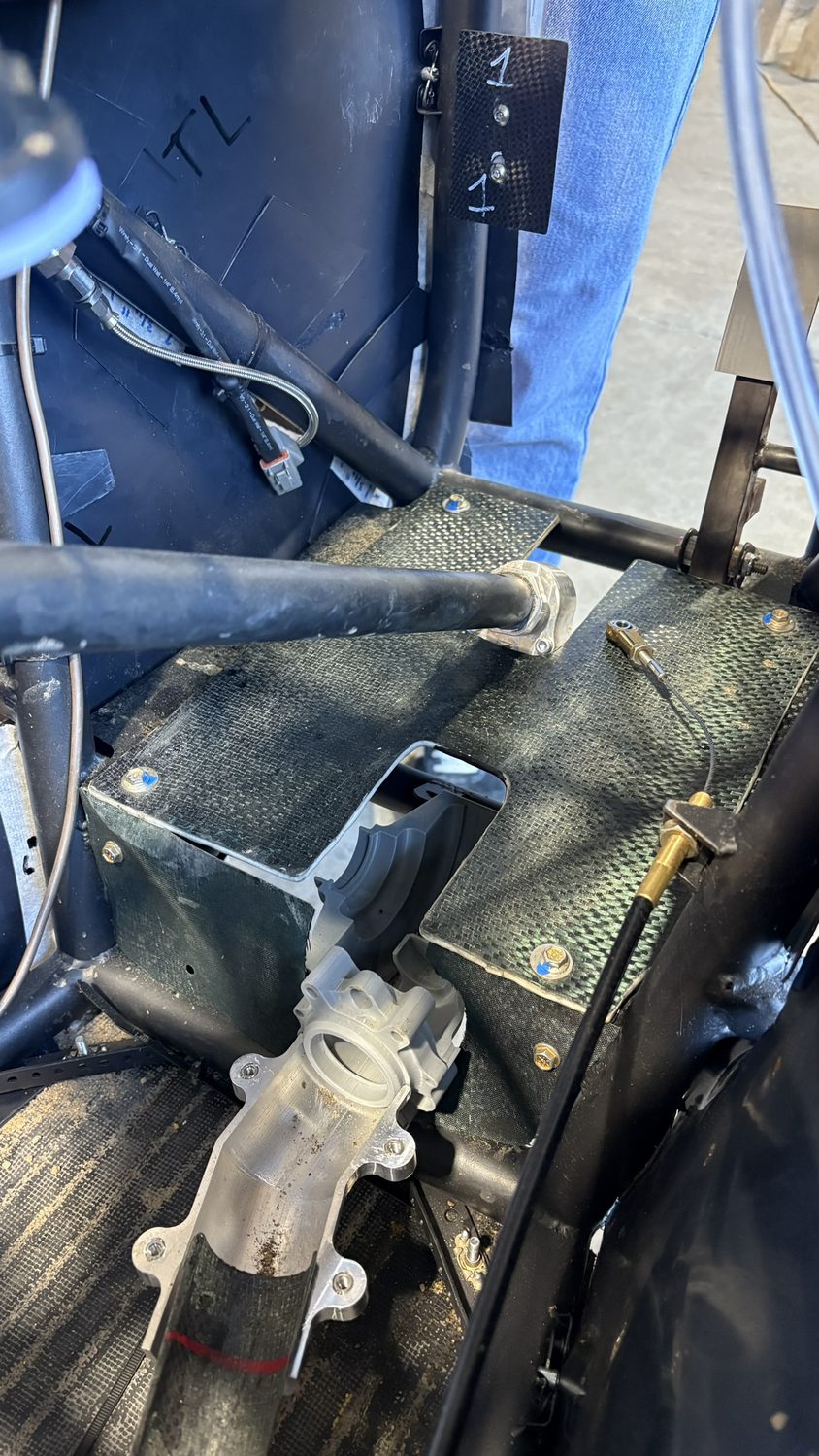
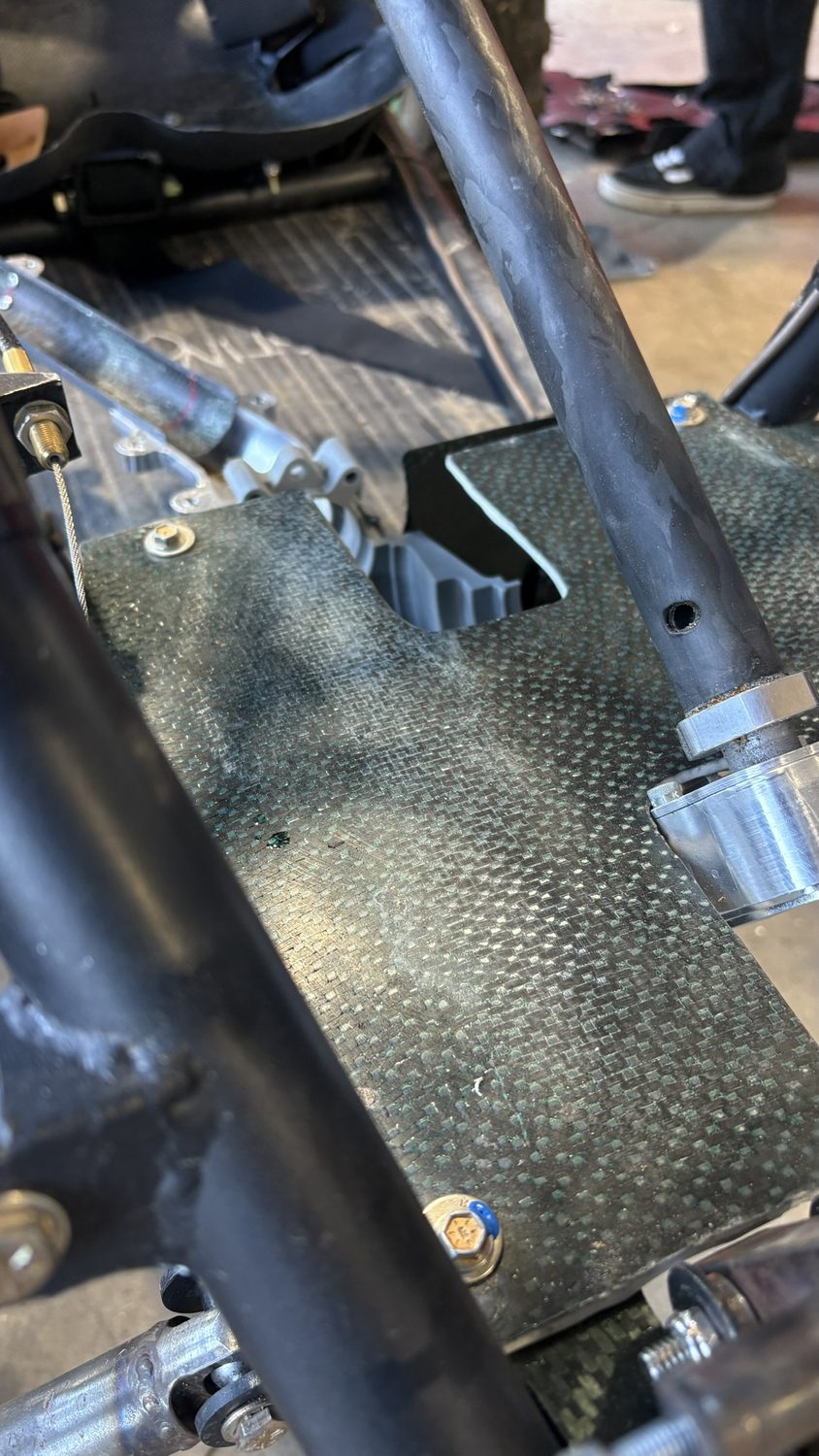
The footplate sits between the driver's feet and the front of the car, so it has a hard requirement beyond carrying foot loads: under load, its total deflection must stay within a clearance tolerance so the plate cannot contact rotating components or any hazardous release of energy. That turned the analysis into a displacement problem with a pass/fail criterion, not just a strength check.
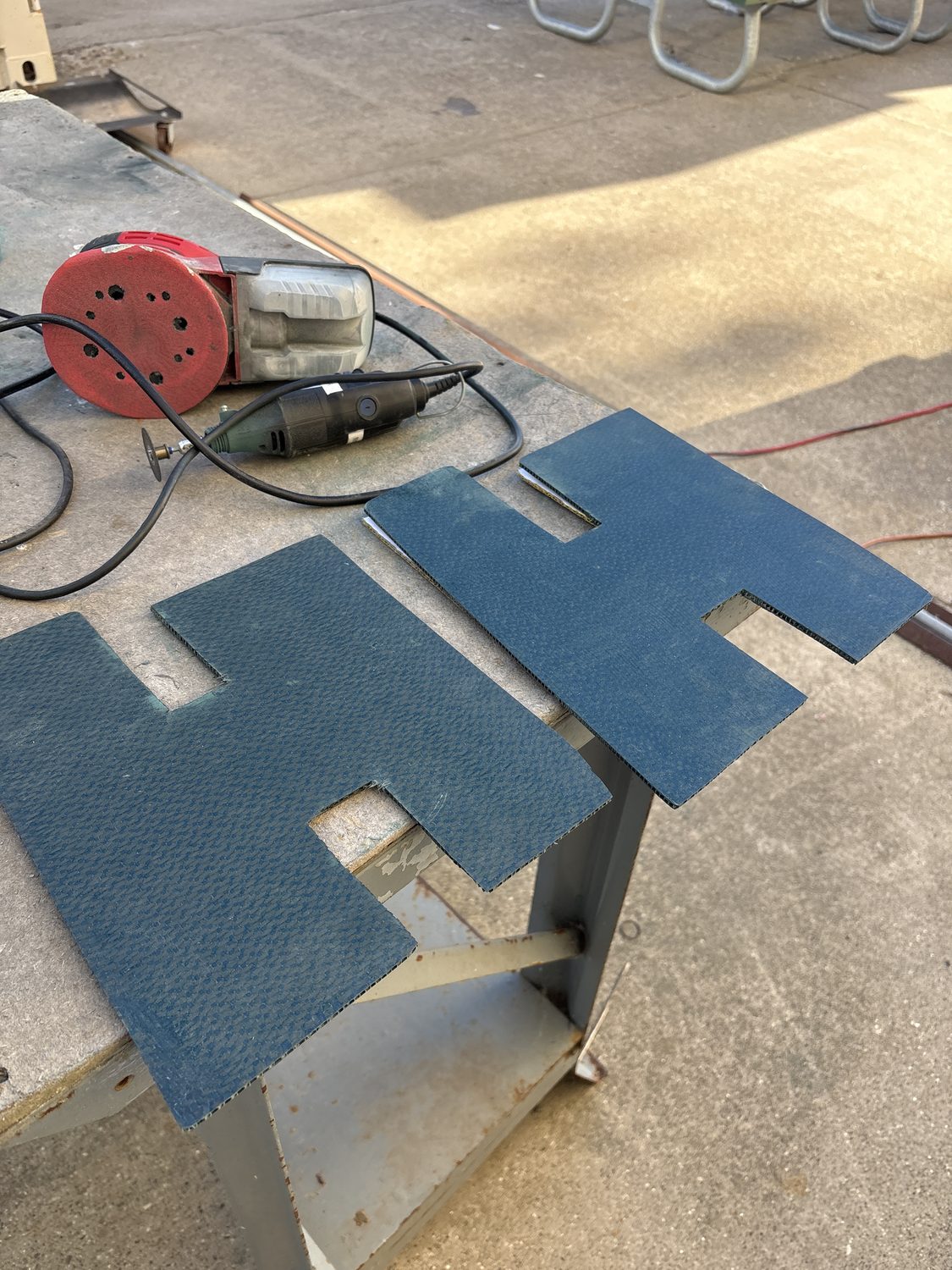
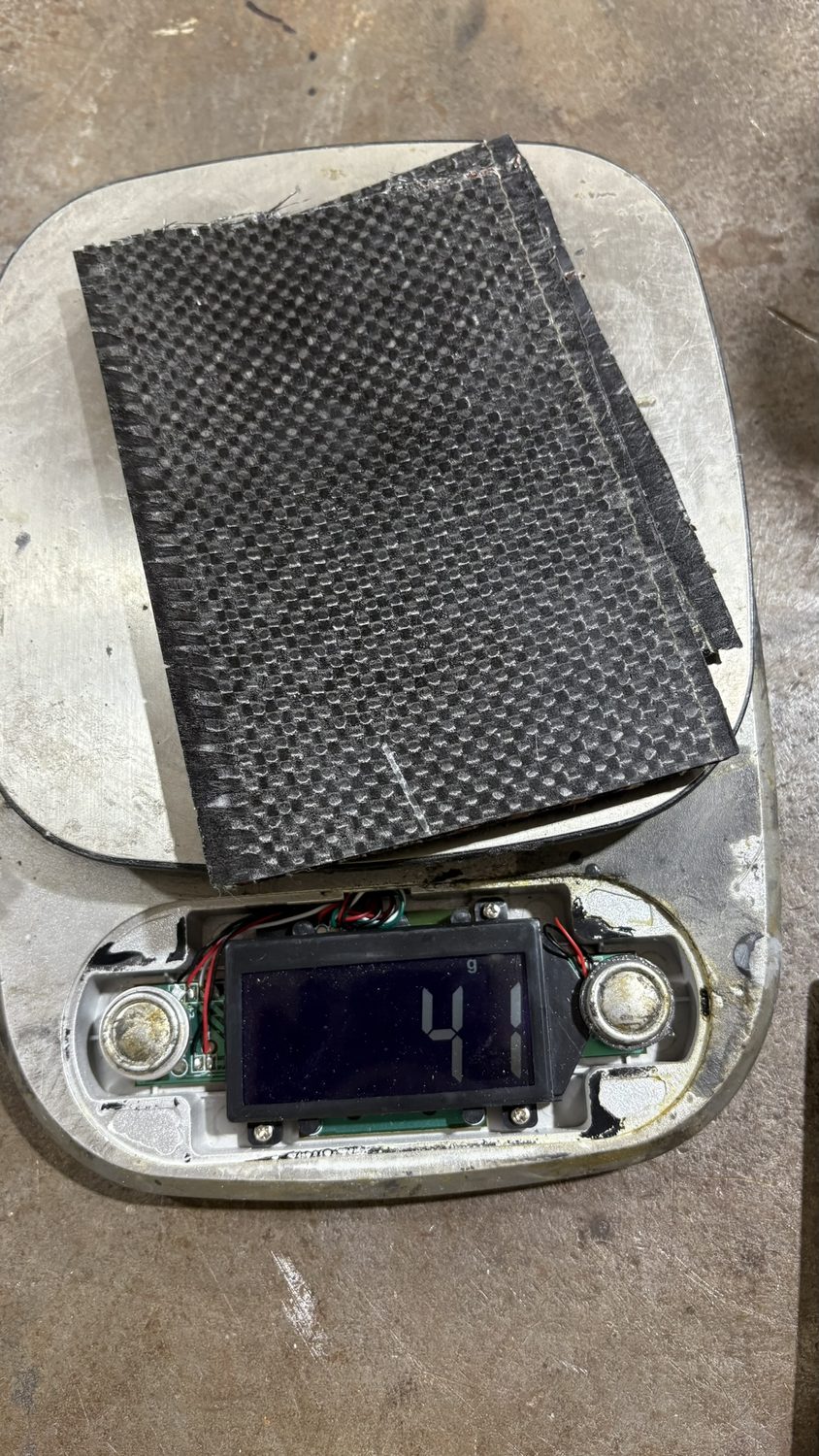
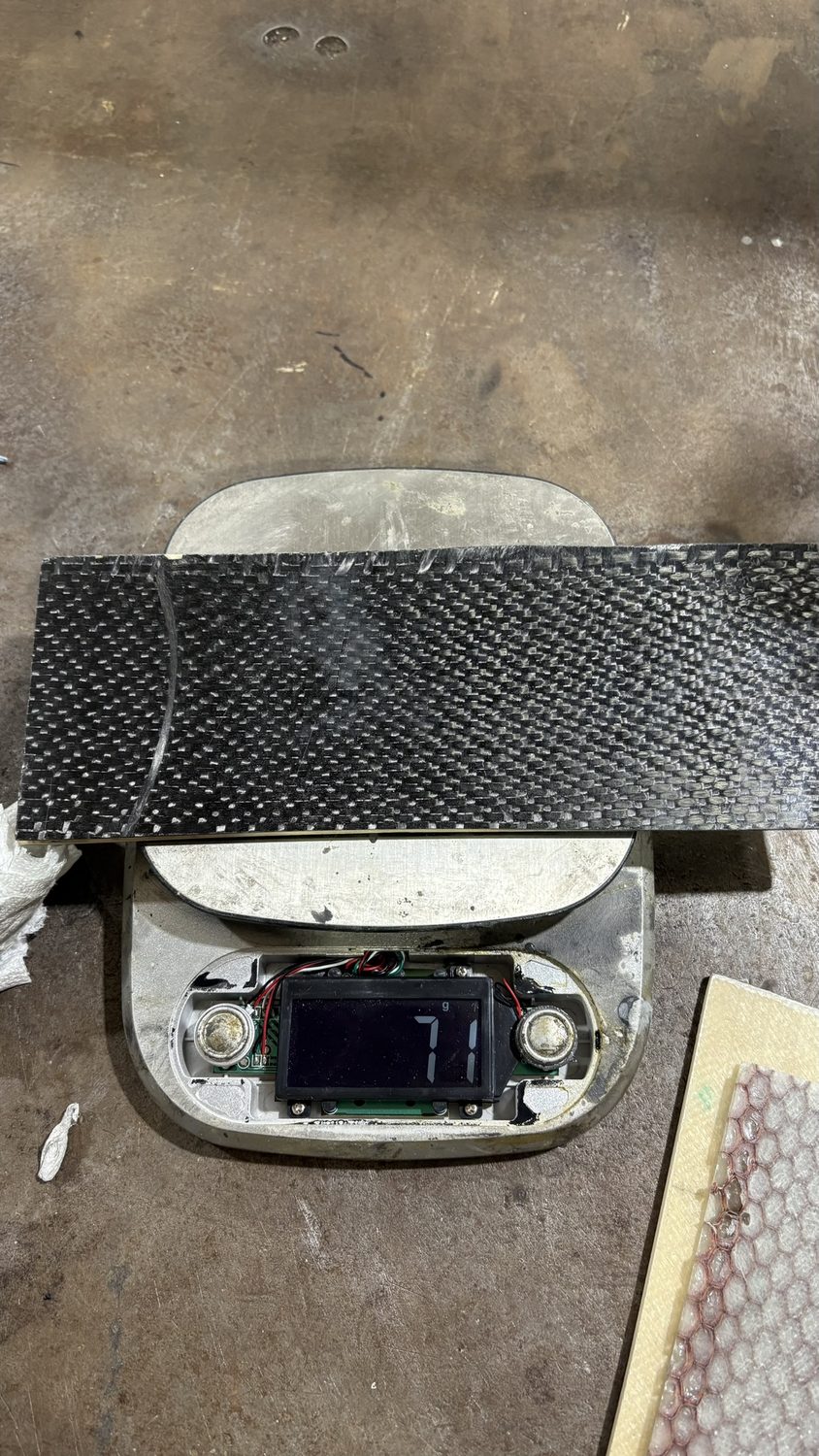
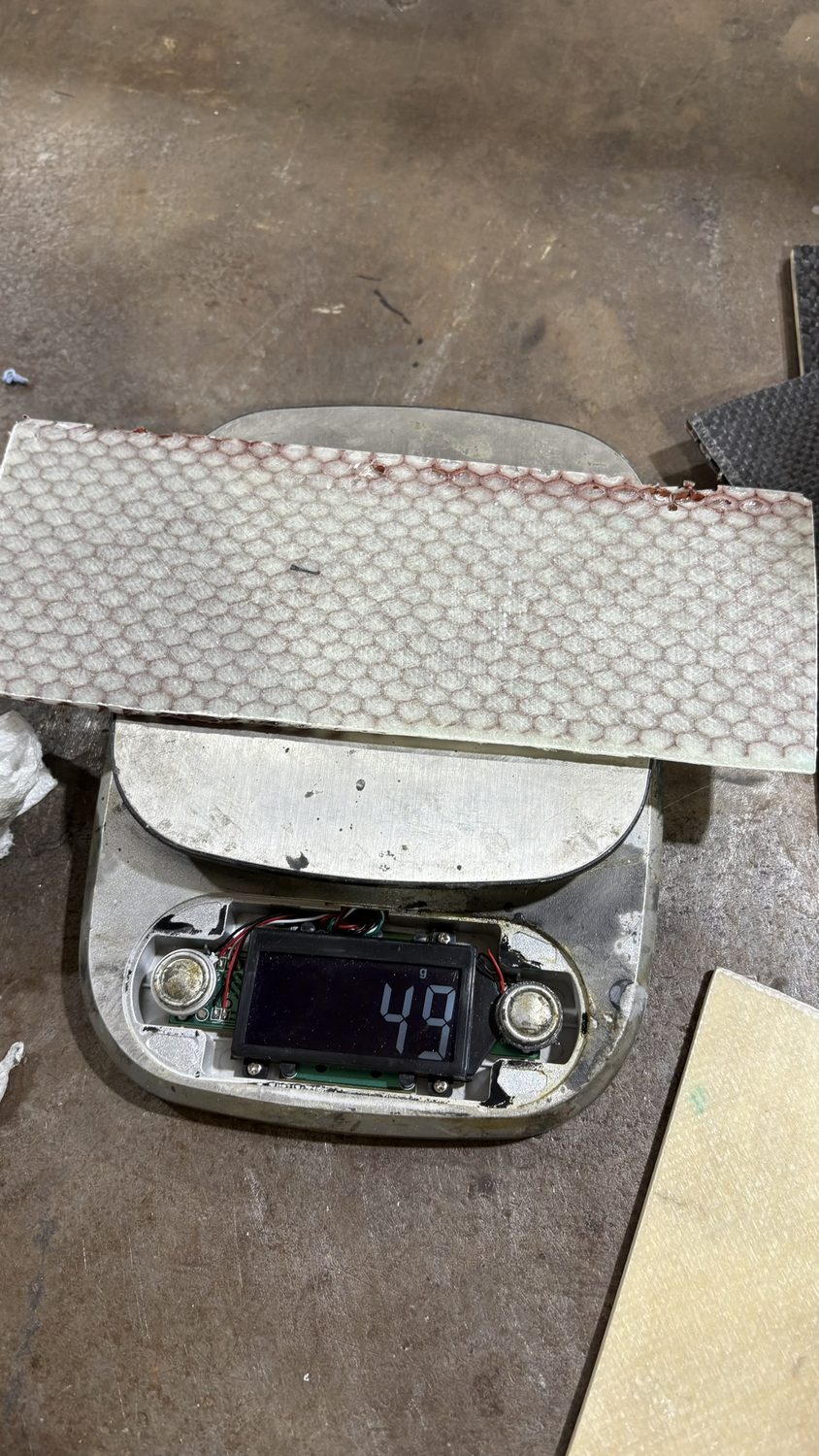
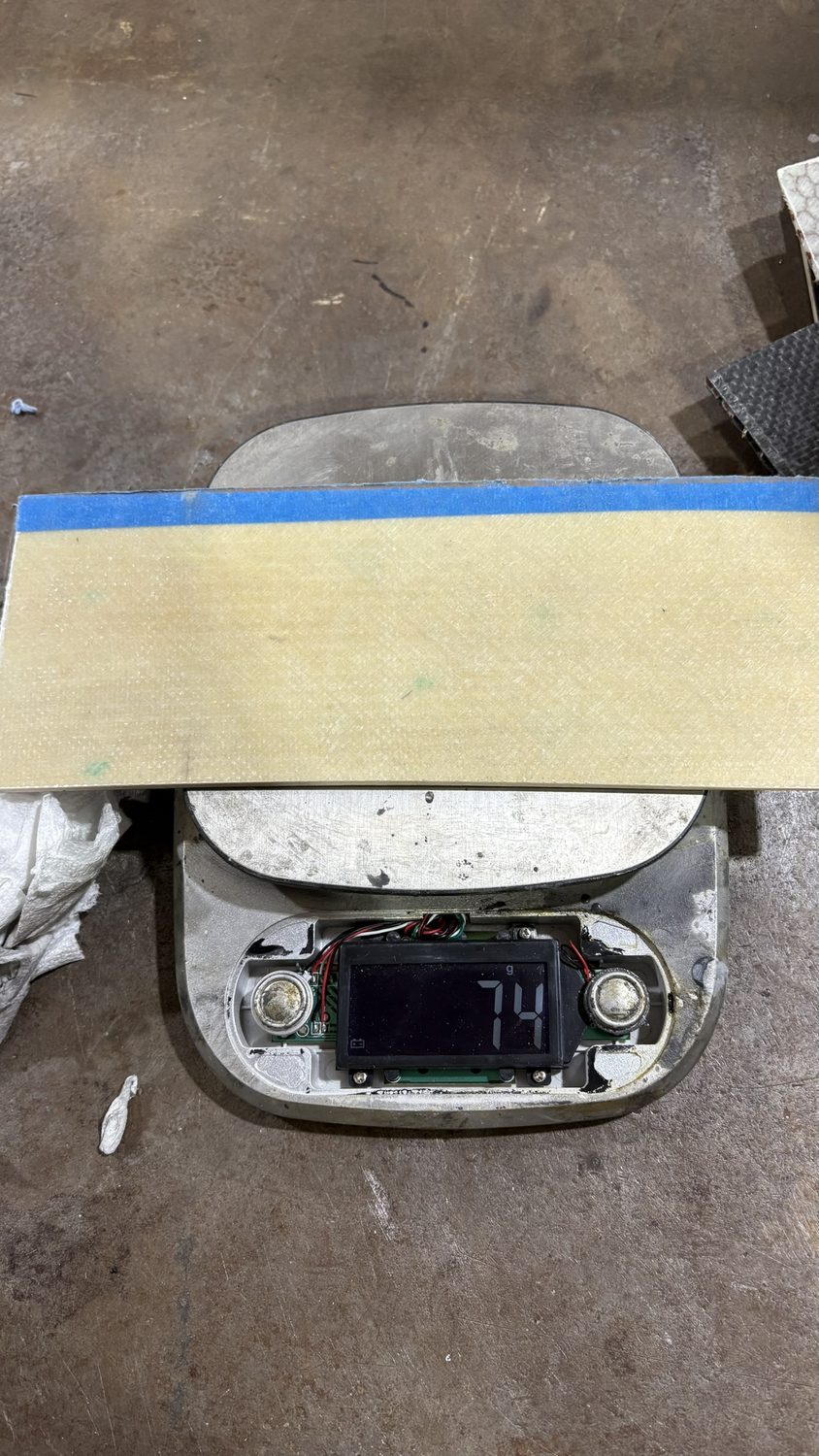
Rather than trust an unvalidated model on safety-relevant hardware, I validated the simulation first at the sample level. I fabricated four candidate sandwich configurations (carbon/Nomex, carbon/balsa, fiberglass/Nomex, and fiberglass/wood), ran three-point bend tests on each, and compared the flexural stiffness from each sample's force-displacement curve against an ANSYS simulation of the same bending case.
With the model matching test at the coupon level, the same methodology went into an ANSYS ACP model of the real footplate geometry under representative foot loading to predict total displacement against the clearance requirement. The carbon/Nomex layup gave the best stiffness-to-weight of the four candidates, matching the analytical ranking, and became the final design on the 2025 car.
- Displacement requirement: no contact with rotating components or stored energy under load
- ANSYS bending model validated against measured force-displacement stiffness
- Four candidate layups fabricated and bend-tested head-to-head
- Validated methodology applied to the full footplate geometry in ANSYS ACP
- Carbon/Nomex selected for best stiffness-to-weight, ran the 2025 season